
Global markets are currently navigating a complex intersection of geopolitics and monetary uncertainty.
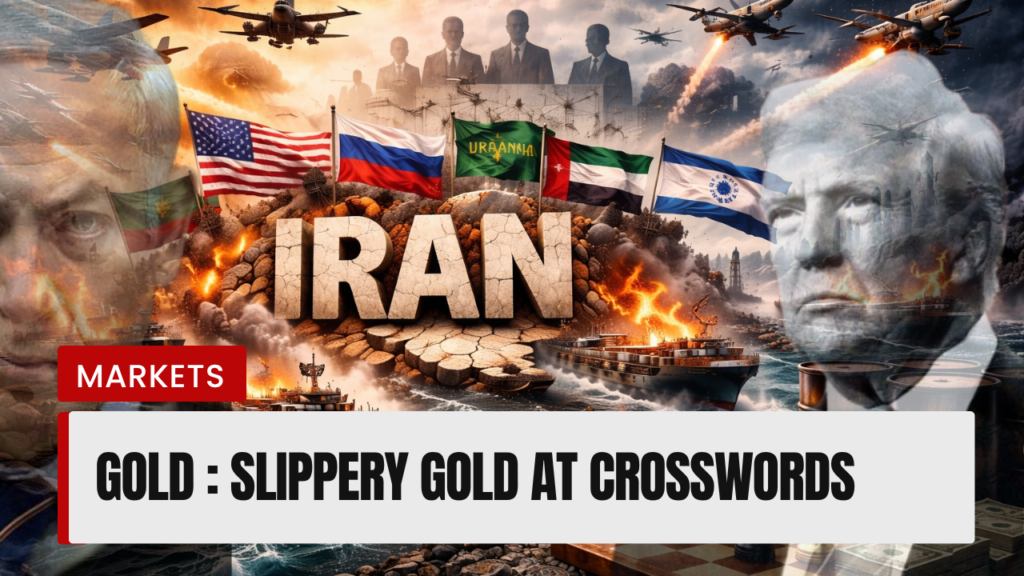
The evolving situation around Strait of Hormuz, ongoing US–Iran tensions, and fragile ceasefire signals are shaping investor sentiment across asset classes—especially gold.
🕊️ 1. Iran Peace Talks – Temporary Relief, Not Resolution
Recent developments suggest intermittent progress in US–Iran peace negotiations. While headlines hint at de-escalation, markets remain cautious. Any disruption in the Gulf region can quickly reverse optimism, keeping geopolitical risk premium alive in gold prices.
🛢️ 2. High Energy Prices – Inflation Catalyst
Crude oil continues to trade at elevated levels due to:
Supply concerns via Hormuz
Strategic naval presence by global powers
Risk of shipping disruptions
Higher oil prices act as a global inflation trigger, increasing input costs across economies. Historically, inflationary environments tend to support gold as a hedge.
🌊 3. Ocean Dominance & Trade Route Control
The geopolitical race for control over critical sea routes—especially near the Persian Gulf—has intensified. Any escalation in maritime tensions could:
Disrupt global oil flow (~20% via Hormuz)
Increase freight and insurance costs
Push inflation higher
This indirectly strengthens the long-term case for gold.
🏦 4. Uncertain Monetary Policy
Markets are currently divided over the direction of global central bank policies. The stance of the Federal Reserve remains data-dependent:
Sticky inflation → Delayed rate cuts
Economic slowdown → Pressure to ease
This uncertainty keeps gold in a range-bound but bullish bias.
📉 5. Fed Interest Rate Decisions – Key Trigger
Interest rates play a critical role in gold pricing:
Higher rates → Negative for gold (due to yield competition)
Rate cuts → Positive for gold
With no clear timeline from the Fed, gold is reacting more to geopolitical cues than policy clarity.
🏆 6. Central Banks Buying Gold – Strong Underlying Support
Global central banks continue to accumulate gold reserves:
Diversification away from USD
Protection against currency volatility
Long-term strategic reserves
This steady demand is providing a strong price floor for gold.
📊 Technical Analysis
Level Price (USD)
🎯 Target 2 : $4900 ( ₹160,000 )
🎯 Target 1 : $4740 ( ₹155,000 )
📍 CMP : $4600 ( ₹151,000 )
🛡️ Support 1 : $4450 ( ₹147,500 )
🛡️ Support 2 : $4330 ( ₹144,000 )
👉 Outlook:
Gold is trading near a crucial resistance zone
Sustaining above $4600 may push towards $4740
Breakdown below $4450 could trigger short-term correction
🔍 Conclusion
Gold is currently balancing between geopolitical fear and monetary uncertainty. While temporary peace signals between the US and Iran may limit sharp upside, underlying factors remain supportive:
✔️ Persistent inflation risk due to high oil prices
✔️ Strategic central bank buying
✔️ Ongoing uncertainty in interest rate decisions
As long as global tensions remain unresolved and inflation concerns persist, gold is likely to maintain a cautiously bullish trajectory.
📚 References
Global oil trade data related to the Strait of Hormuz
Policy outlook from Federal Reserve
Central bank gold reserve accumulation trends (IMF & World Gold Council reports)
Recent geopolitical developments in Middle East
⚠️ Risk Disclaimer
This blog is intended for informational and educational purposes only. Commodity markets, especially gold, are subject to high volatility influenced by geopolitical events, macroeconomic data, and policy decisions. Prices mentioned are indicative and may vary. Investors are advised to conduct their own research or consult a financial advisor before making any investment decisions.
A Bog By –